Story
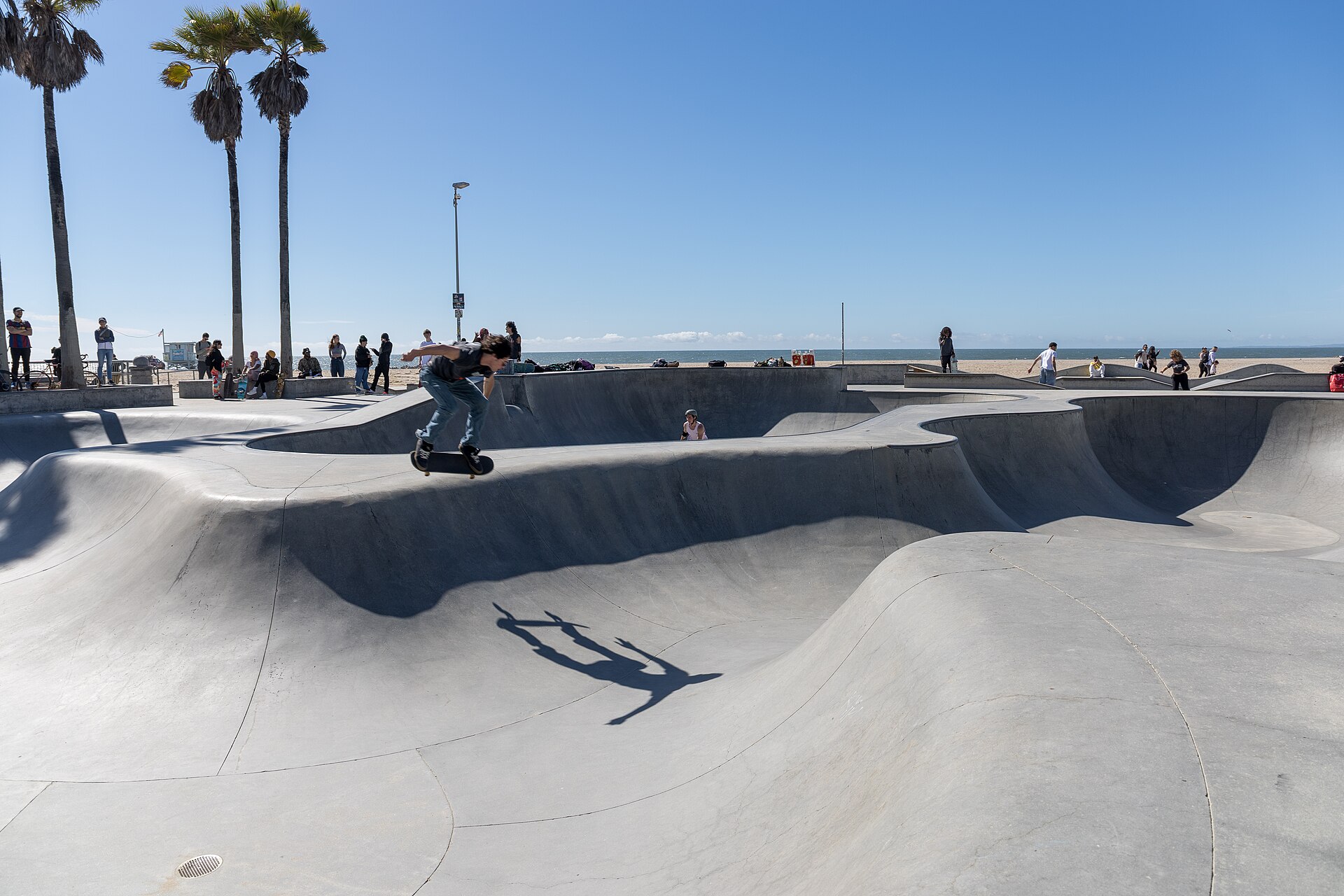
The Skateboarders of Venice Skate Park
Sixteen thousand square feet of concrete bowls at the edge of the Pacific — inside the skate park that belongs to everyone and no one.

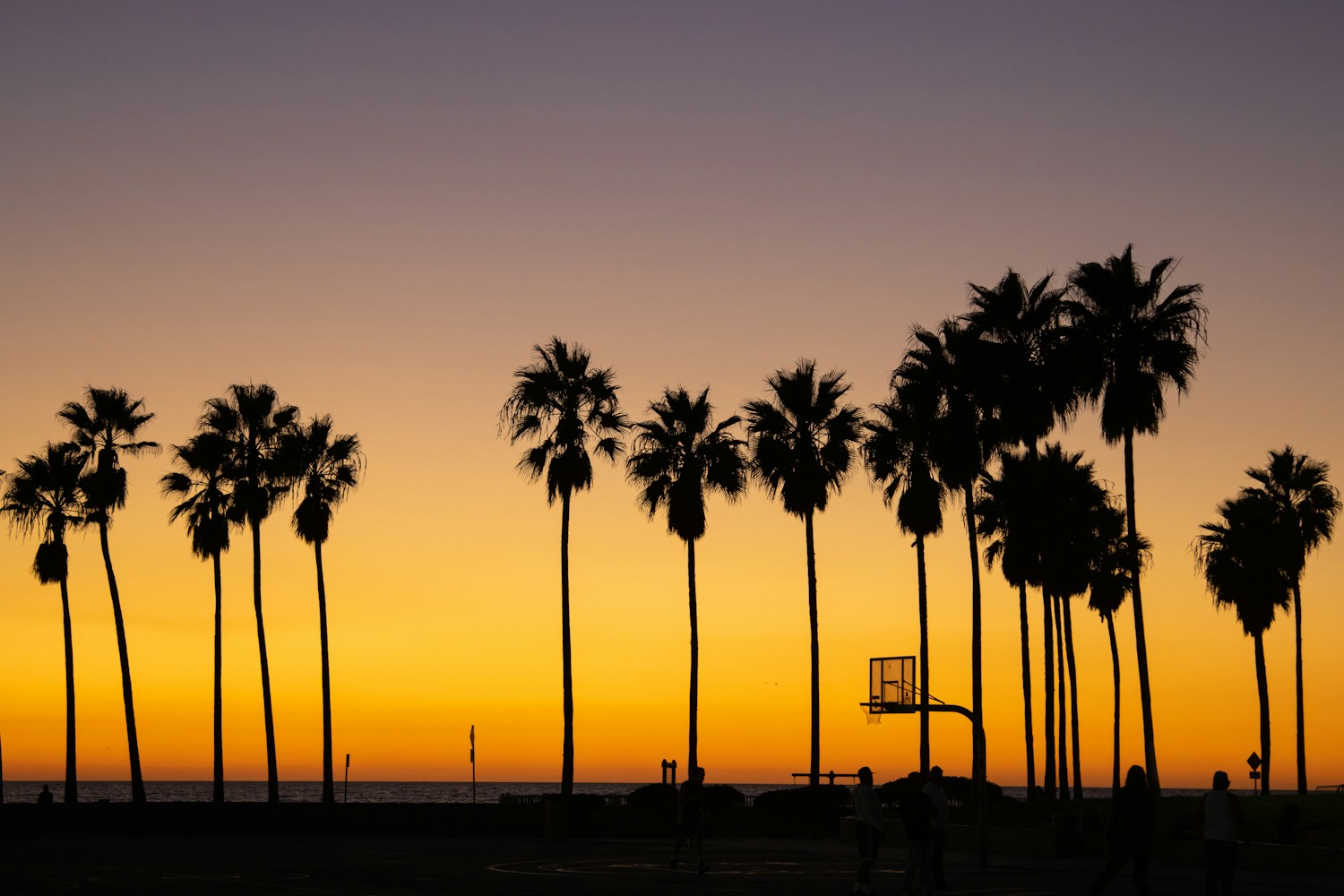
If you busk on Ocean Front Walk, you are working in Harry Perry's building. Perry — the Kama Kosmic Krusader — has performed on the Venice Beach Boardwalk since 1973: electric guitar, turban, target-design guitar, on roller skates, later inline and LandRoller skates, leaning on distortion and Hendrix-style lead work for more than five decades. His credits run from film cameos in White Men Can't Jump, Point of No Return and Tenacious D in The Pick of Destiny to TV's Heroes and CSI, and stages shared with Jane's Addiction and the Grateful Dead. He is not a mascot. He is the archetype: a boardwalk performer with a federal-court chapter in his biography.
For years, the west side of Ocean Front Walk ran on allocation. Buskers' advocacy records describe the system that started in 2005: monthly permits distributed by lottery for 40 performer spots and 60 vendor spots along the boardwalk, administered through the City's parks department. The logic was crowd control — the boardwalk is one of the most contested performance strips in America, and unallocated space meant conflict. The cost was a permit wall between a performer and a public sidewalk, which is exactly where the system ran into the First Amendment.
Perry himself successfully fought for performers' rights on the boardwalk in federal court in the 1990s, per his registry biography. The permit regime met the same wall later: reporting on street-performance rules notes that a court struck down, as unconstitutional, the regulatory system Los Angeles put in place in 2008, which had required performers and vendors to acquire permits via lottery to occupy boardwalk spaces — and invalidated a related ban on musical instruments and amplifiers in designated areas. City records also show the council declaring Ocean Front Walk, from the Santa Monica border to 17th Street, an officially recognized free speech and expression zone, under Los Angeles Municipal Code Section 42.15.
The honest guidance is layered. Performance on the boardwalk sits inside free-speech protection, but it is not a lawless strip: amplified sound, crowd blockage and merchandise sales are the pressure points where rules and enforcement still bite, and the specific allocations and restrictions have shifted with litigation. Before you set up, check the current LA Parks and LAMC 42.15 rules rather than any blog's summary — including ours. Then do what Perry has done since 1973: pick your spot, play like the crowd owes you nothing, and earn the circle that forms.
KEEP READING
Sixteen thousand square feet of concrete bowls at the edge of the Pacific — inside the skate park that belongs to everyone and no one.
Two and a half miles of street performers, skate culture, Muscle Beach, and oceanfront chaos — how to do the Venice Boardwalk right on your first visit.
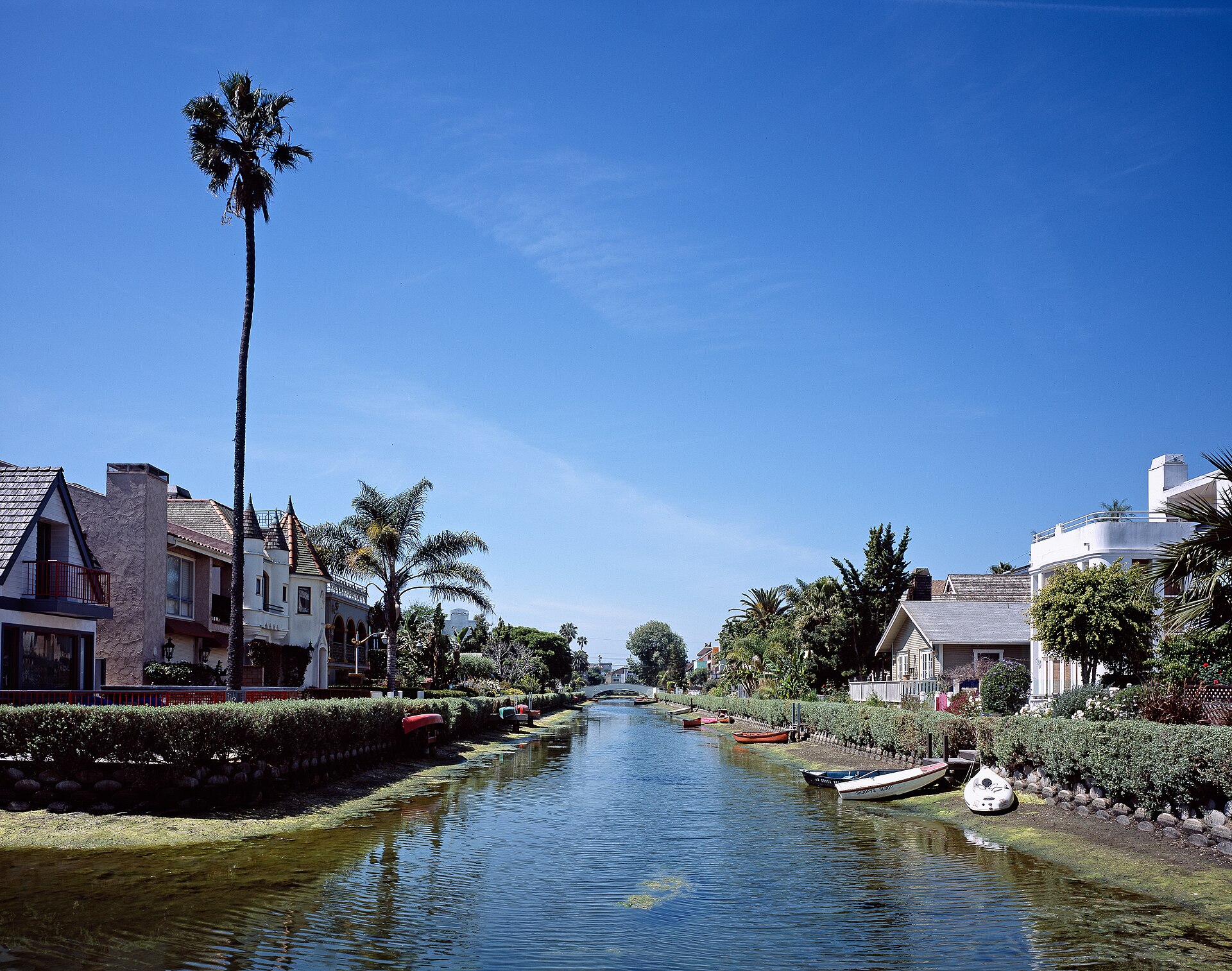
Four blocks from the boardwalk crowds, the Venice Canals are the neighborhood's unlikely sanctuary — a walking guide to the prettiest half-mile in Los Angeles.